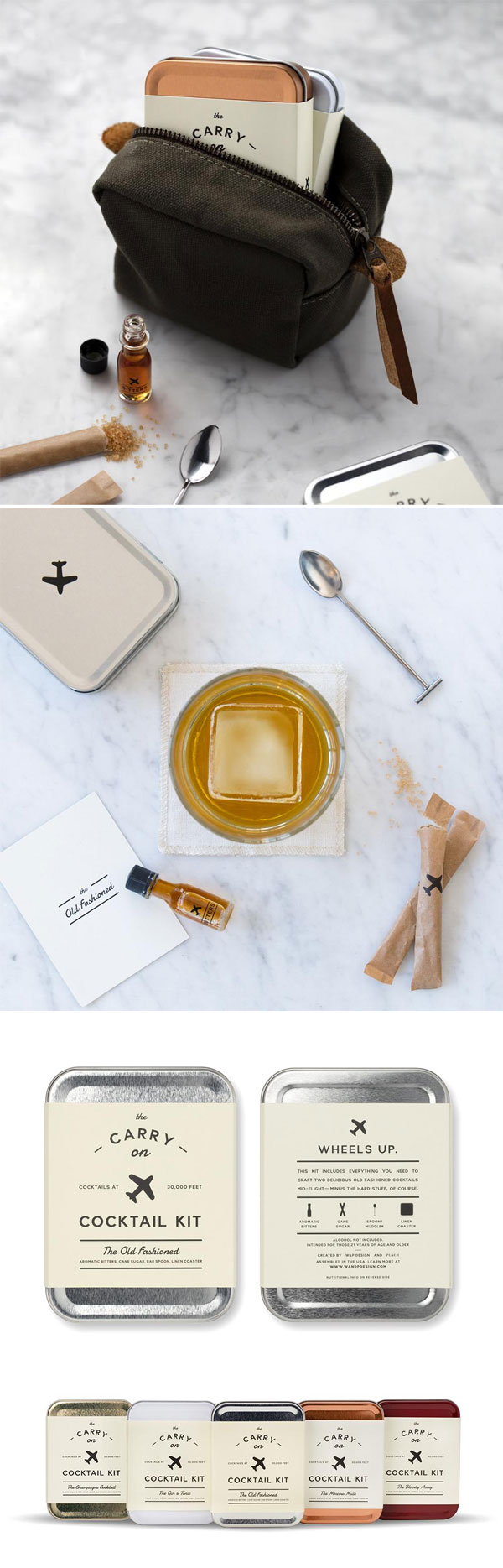
Lucy Engelman‘s culinary illustrations left me dying to run to the kitchen and prepare one of these beautiful dishes. :)


Lucy Engelman‘s culinary illustrations left me dying to run to the kitchen and prepare one of these beautiful dishes. :)


Completely in love with Block Shop*! ♥
*Block Shop is an Indian textile company founded by sisters Lily and Hopie Stockman. They work with the Chhipa family of master printers based in Bagru, India, who have been hand block printing with natural dyes for over 350 years. Their textiles are printed one at a time with hand-carved wooden blocks and non-toxic natural dyes on the finest Indian silk-cotton blend.
∴ info ∴
Block Shop website.


Loving everything about this house: the blue sofa, the amazing chair, the beautiful outdoor space with lovely plants…
∴ info ∴
Justin and Jeanne Roebert‘s home.
Interior design and styling by Hecker Guthrie.
Photos by Derek Swalwell.
Via The Design Files.


Hex Cutting Board, geometric and beautiful, from Field. The faceted edges are not only stylish but also funcional, making the board easier to pick up (on one side). My kitchen needs it!

I’ve noticed that many people arrive here at Não Me Mande Flores looking for the blog’s Media Kit, especially since it has been mentioned as an example in many posts about the subject from other blogs. I am happy and honored that my work is being used as an example for other bloggers (you guys are very sweet!), but I decided to write this post to reinforce the idea that a Media Kit should always be truthful and original, NEVER a copy of that amazing one you found on the Internet.
The subject is controversial, precisely because there is no official text or practice guide available about the construction of Media Kits. The lack of qualified information on the topic makes consulting Media Kits from more experienced blogs the only option for those interested in making their own (and that generates an unpleasant phenomenon: the copy of personal and nontransferable content).
That’s why I decided to publish here on the blog part of my research on the subject – made during a postgraduate degree in Digital and interactive Media I concluded last year – to help those interested in building a original Media Kit, that best represent your blog, without copying the work of someone else.
Like I always say: let’s make a nicer and friendlier web! :)

A Media Kit or Press Kit is a document provided by sites and blogs presenting all its access and audience data, as well as any other relevant information to a potential sponsor. Its goal is to help them find all the information they need to advertise on your blog and make their experience easier.
The Media Kit works as a kind of showcase where the blog highlights its best features , motivating the sponsor to purchase advertising space and other forms of paid media within your site. Therefore, it is an essential resource for bloggers who want to monetize their activities.

The first step in the construction of a Media Kit is to create a specific page within your blog just for this purpose. This page will be an exclusive channel for business contacts and should only contain relevant information to the advertiser.
It’s important that your contact info (email, phone etc.) is clearly visible on the page. The Media Kit can be placed directly on this page or you can ask to those interested to request the document via e-mail (you can send them the Media Kit in a PDF or PPT file).

You should create a nice, clean presentation, that reflects your blog’s brand. A good strategy is to use the same color scheme, typography and any other element that emphasizes your brand.
Your readers and potential sponsors should be able to identify that this is your Media Kit, even if it’s out of your website (if sent by e-mail, for example). The use of graphics facilitates the reading of data and shows the blogger’s organization skills.

What’s your blog all about? This information may seem obvious, but is often forgotten in the process of building a Media Kit. It’s essential to describe the overall goal of your site, to specify what you usually talk about – especially if you have a niche blog – and why people are interested in what you have to say. This way advertisers will have a better understanding about your blog and about the kind of audience it attracts.

Is important to include information about your readers, demographic data such as gender, age and location because brands want to know if they can connect with your audience through your site. If you do not have this information, ask! A simple survey or a post asking for answers will suffice.
The most relevant informations for marketing professionals are: gender, age, education and personal monthly income. Another useful information to advertisers are the readers online habits. Data regarding the amount of time that readers spend online, if they buy or not via Internet and what kind of products they consume are very useful to define whether it is worth or not to close a partnership with your blog.
If the number is considerably large, you can include the percentage of how many readers bought products indicated by you, increasing your potential as a spokesperson for brands and companies.

Advertisers want to know exactly what audience you’re reaching, so it is essential to provide real traffic statistics. You can get this information using tools like Google Analytics, Clicky and Quantcast.
The most requested statistic data are: visits, unique visitors, pageviews, bounce rate and time on page. These metrics are usually calculated at intervals of one month (unique visitors per month, for example). According to the Google Analytics Metrics Definitions:
Also share the number of RSS subscribers, newsletter and other types of feed, if the number of subscribers is relevant. NEVER disclose false information or increase your number of visits or pageviews. If you promise something you can’t deliver, your relationship with sponsors might not end well. It is always advisable to keep an honest relationship with your advertisers (and readers).

Let potential advertisers know in which social media sites your blog is present. Disclose the number of your blog followers via Twitter and Facebook and any other sites where you and your followers have an active participation. The more followers you have, the more interest will be generated to your page.
If you have already made a campaign that involved social media, it’s worth mentioning the number of tweets, likes and other shares you got, showing the kind of exposure that advertisers can expect in future campaigns.

If your blog has been mentioned in the press, in other blogs or any other relevant communication medium, it is recommended that this information be included in your Media Kit. Positive mentions are another proof of the quality and reliability of your content and reinforce the value and positioning of your brand.

A Media Kit must specify what are the advertising space options offered, what are the sizes available for ads and their positions within the site. There is no exact formula to calculate the price of advertising and the most common procedure is to research the amounts charged by blogs within the same niche and do the math from there. Disclosing these values inside the Media Kit is at the discretion of the blogger.
The most common forms of advertising on blogs are:

The Media Kit should include a page with the brands and companies that have already announced on the blog. These companies may be represented by their logos, which can contain links to their ads inside the blog. If the blog has a success story with a company and the numbers of a particular campaign are significantly high, it’s worth to give the due emphasis within the page.
♥ ♥ ♥
In summary, a successful Media Kit is one that shows all the best features of a blog, with clarity and attractiveness. It’s not necessary to include all the information listed in this post and it is always nice to remember that transparency and honesty are a few of the factors that help to build a blog’s solid reputation with their audience and sponsors.
And finally I would like to thank my blogger friends, who contributed to my research, sending me their Media Kits, answering questions and being awesome! You rock!
♥ ♥
∴ info ∴
The content of this post was taken from Building Media Kits as an Essential Resource for Monetizing Blogs, my final theses in the Postgraduate degree in Digital and Interactive Media completed in 2012 and can not be reproduced without permission.

Last week I went to another great event at L’Oréal headquarters, the launch of the Magic Elixir, a new product by the amazing Kiehl’s. The product is a potent concentrate of natural oils that nourishes and strengthens the scalp and increases the brightness of the hair.
The Magic Elixir is a combination of rosemary leaf oil and avocado oil and must be applied on the scalp. That’s right, the product is applied directly to the scalp and can be used by men and women of all hair types (including those who have oily hair!).

This is how it works: Before washing your hair (the Magic Elixir is a pre-shampoo treatment) apply the product directly to the scalp, massage and leave it for 10 minutes. After 10 minutes, wash your hair normally.
Warning: the Magic Elixir should not be applied to wet or damp hair, because the water blocks the penetration of the natural oils!
♥
Here’s another tip, the Amino Acid line from Kiehl’s, containing pure coconut oil. I tried it that day and my hair looked amazing afterwards!

If your hair is very dry or damaged you can use the Magic Elixir once or twice a week. Otherwise, just a monthly application is necessary. Amazing, right?
I was very impressed with the product, my hair was super shiny and soft and I could feel the scent of the natural oils (rosemary, especially) until the next day, after washing my hair with my regular shampoo. Now I’m dying to try other Kiehl’s products!


♥
Guys, look at Mr. Bones, Kiehl’s mascot, relaxing at the event! And I thought he was Mrs. Bones, can you believe? :)


That Mr. Bones is super fancy! ;)
∴ info ∴
Kiehl’s website.


In love with Filippa K spring knits. And that leather skirt also made my eyes sparkle. *-*
∴ info ∴
Filippa K website.


Old shipping containers were used as the structural framework for this World FLEX Home house in China, created by architectural office Arcgency. Everything is prefabricated and the house can be shipped across the world. Online customization-tools give clients the possibility to decide their own version of the house concerning layout, size, facade… Amazing, right?
« I really like that structure with plants and objects in the middle of the room, I think it’s fabulous! ♥ »
∴ info ∴
Arcgency website.
World FLEX Home website.
Via Afflante.


My new favorite illustrator. How not to love everything that Janaína Cecin draws?

Because riding a bike is much lovelier if you have flowers! :)
1. Summer Bicycle, alice b. gardens photography.
2. Clémence Poésy in a Glamour magazine editorial (feb 2012).
3. Image from Girls on Bikes, Free People jan 2013 catalogue.
4. This cute bicycle was one of nina’s clicks in Buenos Aires.